


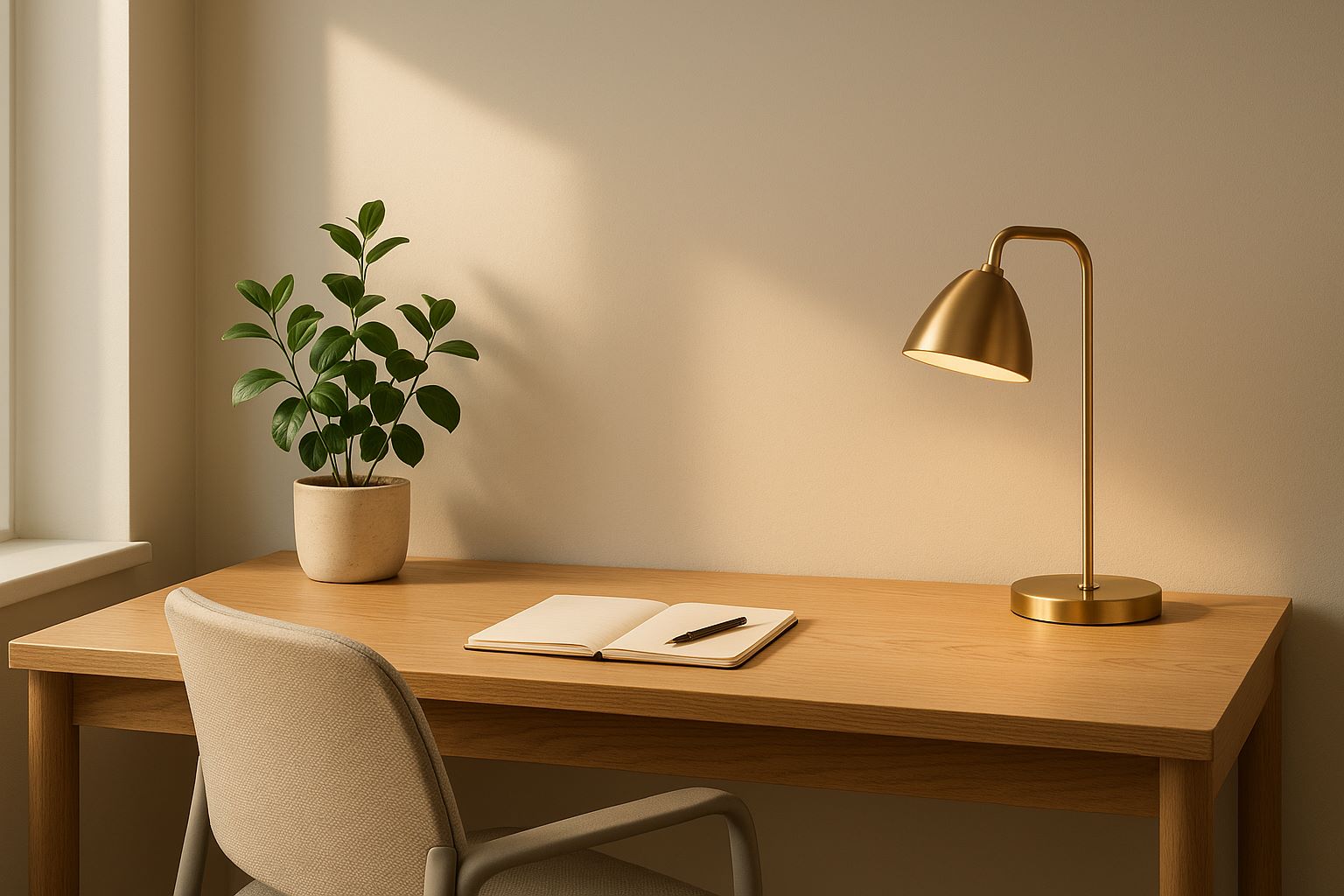

In an age where the home has become the centre of learning, creativity and remote work, the study table is no longer a passive piece of furniture—it is an engine of discipline, concentration, memory and motivation. For students, professionals and lifelong learners, the direction and placement of a study table can dramatically influence how effectively the mind absorbs information, stays focused and performs under pressure.
This guide reinterprets study table direction as per Vastu through the lens of modern design psychology, lighting science and ergonomic reasoning. The result: a deeply practical, design-forward framework that upgrades everyday study spaces into zones of high performance and mental clarity.
Table of Contents
Why Direction Still Matters: The Modern Role of Vastu in Concentration & Success
Traditional Vastu Shastra assigns meaning to directions based on energy flow. Modern neuroscience confirms that orientation affects visual load, posture, attention and mood regulation.
When both perspectives are layered together, direction becomes a design tool that subtly influences:
- Cognitive stamina
- Learning efficiency
- Habit formation
- Emotional balance
- Productivity rhythms
Your study table’s direction determines what the brain encounters in its immediate visual field—and the brain responds more strongly to space than we often recognise.
1. East: The Best Study Table Direction for Focus & Cognitive Freshness
East is historically associated with the rising sun—symbolising clarity, awakening and renewal.
Why East Works Today:
- Morning light improves alertness and recall.
- Reduces screen glare during daytime study.
- Encourages a rhythm of early productivity.
Best For:
Students preparing for exams, morning learners, anyone needing mental sharpness.
2. North-East: The Direction of Deep Learning, Calm & Intellectual Strength

In Vastu, the North-East (Ishan) is the zone of wisdom and intuition.
Modern Interpretation:
- Naturally bright but not harsh—ideal for long study streaks.
- Minimises visual clutter and overstimulation.
- Helps the mind shift into “deep work” mode faster.
Best For:
Researchers, writers, coders, postgraduates, professionals in analytical fields.
3. North: Best for Logical Subjects, Memory & Career-Aligned Study
The North direction is governed by Mercury—linked to intellect and communication.
Modern Reasoning:
- North light is soft, consistent and ideal for reading or laptop-heavy work.
- Promotes mental neutrality and analytical processing.
Best For:
Law aspirants, commerce students, statisticians, strategic thinkers.
4. Directions to Avoid for Study Tables (and the Real Reasons Why)
South
Traditionally discouraged due to intense energy.
Modern reason: Harsh southern light increases fatigue and visual stress.
South-West
Creates grounding energy but slows new learning.
Modern reason: Heavy corner energy reduces motivation and alertness.
West
Acceptable only if you study predominantly in the evening.
5. Placement Rules: The Spatial Behaviour Science Behind Vastu
Direction alone is not enough. Placement shapes your brain’s sense of safety, boundaries and focus.
A. Never Sit with Your Back to the Door
This creates subconscious vigilance and breaks concentration.
B. A Solid Wall Behind You
Provides psychological grounding and postural support.
C. Avoid Studying Directly Facing a Window
Movement outside can pull the mind away; strong light reduces eye comfort.
D. Maintain a Clear Zone Around the Desk
At least 30–45 cm of breathing room creates mental spaciousness.
6. Study Table Design: Shapes, Materials & Dimensions According to Vastu
Ideal Shapes
- Rectangular: Best for clarity, structure and consistent learning.
- L-shaped: Excellent for multitaskers or students managing multiple subjects.
Materials
- Natural wood: Warm, grounding, stabilising.
- Avoid glass: Highly reflective, energetically scattered, visually unstable.
Size
A study table should feel generous but not overwhelming.
The ideal depth: 24–30 inches
The ideal height: elbow level when seated
7. Study-Friendly Colours Guided by Vastu & Design Psychology
Colour affects mood, attention and memory retention.
Best Colours
- Muted greens → Renewal and calm
- Warm beige → Stability
- Soft blues → Mental clarity
- Light wood tones → Organic comfort
Avoid
- Red, neon colours → Overstimulating
- Jet black → Too heavy for learning zones
8. Lighting: The Most Overlooked Vastu Element
Lighting has a profound impact on concentration—and Vastu aligns surprisingly well with lighting science.
Use Layered Lighting
- Ambient lighting: Soft, even brightness
- Task lighting: Focused lamp to minimise shadows
- Bias lighting: Gentle glow behind screens for eye comfort
Avoid Harsh Ceiling LEDs
They increase cortisol and reduce sustained focus.
9. Storage, Organisation & Energy Flow
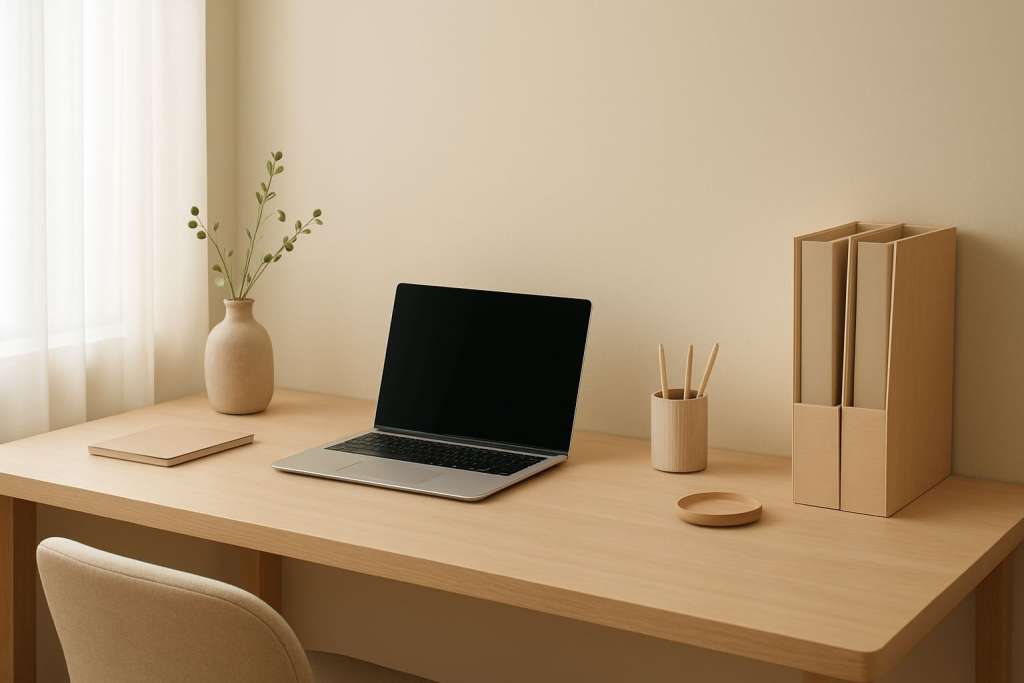
Vastu emphasises clean pathways. Neuroscience confirms clutter reduces working memory.
Rules
- Keep the main desk surface 60% free
- Use vertical organisers instead of horizontal stacks
- Avoid heavy shelves directly above the study table
- Keep stationery accessible but not scattered
10. Advanced Techniques to Amplify Success (Beyond Typical Vastu Advice)
A. The Focus Wall
Place a simple, inspiring visual on the wall the student faces—calms the mind and anchors attention.
B. Behavioural Zoning
Keep a small “reset corner” for 5-minute breaks—reduces burnout and improves retention.
C. BreathFlow Alignment
Ensure no sharp edges from nearby furniture point directly at the study area.
D. The Desk Triangle of Productivity
Position these three items thoughtfully:
- A plant (growth)
- A lamp (clarity)
- A motivational object (drive)
They create a micro-ecosystem of balanced energy.
11. If Ideal Vastu Directions Aren’t Possible
You can still optimise your study environment by adjusting:
- Lighting temperature
- Desk height and ergonomics
- Colour palette
- Storage and clutter strategy
- Chair support
- Boundary-setting between bed and desk
Modern design offers enough ways to neutralise directional constraints.
FAQs: Study Table Direction as per Vastu
1. Which direction improves concentration most?
East and North-East produce the most balanced mental state for long study hours.
2. Can a child’s study table face North?
Yes—North improves memory, clarity and academic confidence.
3. Should a study table face the wall?
Yes, if the wall is calm, light-coloured or decorated with soothing visuals.
4. Is it okay to study in the bedroom?
Yes, but maintain at least 1 metre between the study area and the bed.
5. Does direction matter during night study?
Yes, but lighting becomes equally important—use warm, focused task lights.
Conclusion: A Study Table Designed for Success
Understanding study table direction as per Vastu is not about rigid rules—it’s about creating an environment that nurtures the mind. When direction, placement, lighting, materiality and spatial intuition come together, your study space becomes a sanctuary for clarity, discipline and academic growth.
With this also check out our other blog-
