



If you’re searching for the best balcony design ideas, you’re likely dealing with a common challenge: how to make your balcony beautiful, functional, and aligned with good architectural and Vastu principles—without overcrowding the space. Whether you have a compact apartment balcony or a spacious terrace, the right design can enhance your lifestyle, comfort, relaxation, and even property value.
In modern homes, balconies are becoming reading corners, coffee spaces, mini-gardens, yoga spots, outdoor lounges, and even work-from-home areas. With thoughtful planning and the right structural and interior design logic, your balcony can serve as a calm, refreshed extension of your home.
This in-depth guide explores meaning, benefits, Vastu principles, category-wise balcony design ideas, common mistakes, expert corrections, and a real case study—everything you need to create the perfect balcony.
Table of Contents
Meaning & Concept of Balcony Design
A balcony is an elevated open or semi-open space attached to a room. In architecture, it acts as a transitional zone between indoors and outdoors. In interior design, a balcony provides natural light, ventilation, and recreational value. In Vastu, it represents energy expansion and positivity.
A well-designed balcony includes balance between function, comfort, aesthetics, durability, and climate-responsiveness.
Key Elements:
- Space planning
- Ventilation
- Safe railings
- Practical furniture
- Appropriate lighting
- Weatherproof materials
- Aesthetic harmony
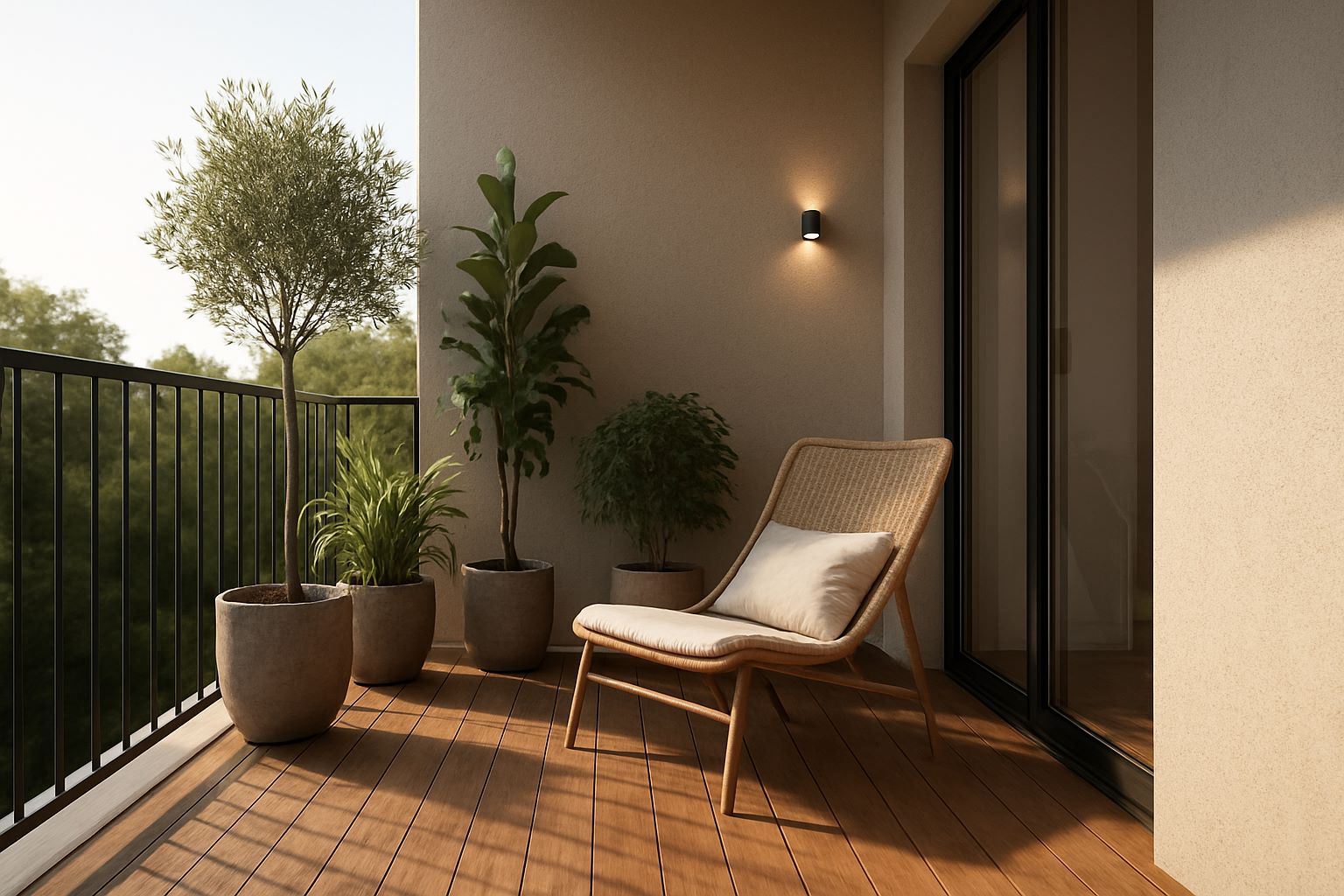
IMAGE PROMPT – Meaning & Concept (16:9):
Ultra-realistic editorial-style modern balcony exterior with wooden flooring, potted plants, lounge chair, soft lighting, minimalist railing, glass door, natural sunlight, high-resolution architectural design.
Importance & Benefits of Balcony Design
A thoughtfully designed balcony goes beyond décor and significantly enhances a home’s wellness, usability, and real estate value.
1. Supports mental well-being
Exposure to sunlight, greenery, and fresh air reduces stress and increases serotonin.
2. Improves ventilation and daylight
Balconies naturally enhance airflow, reducing indoor humidity and boosting comfort.
3. Adds functional space
Use it as a meditation area, dining corner, garden, reading nook, work zone, or lounge.
4. Enhances Vastu energy
Vastu considers balconies in North or East direction highly auspicious for positivity.
5. Increases property value
A well-designed balcony increases aesthetic appeal and usage potential.
Balcony Design Ideas: Category-Wise Guide
Here are the best balcony design ideas arranged by space size, usage, and Vastu alignment.
Balcony Design Ideas for Small Spaces
1. Vertical Gardens
Use wall-mounted planters, ladder shelves, and hanging pots to maximize floor space.
2. Foldable or Wall-Mounted Furniture
Space-saving tables and chairs keep the area flexible.
3. Light Colour Palettes
Soft neutrals like beige, green, pastel blue make the balcony appear larger.
4. Glass Railings
Allow more light, reduce visual heaviness, and expand the perceived space.
Balcony Design Ideas for Large Balconies
1. Outdoor Lounge Zone
Add rattan sofas, weatherproof cushions, small tables, lanterns for a cozy lounge.
2. Balcony Dining Area
A 2–4 seater outdoor dining set turns evenings into café-style experiences.
3. Deck Flooring
Wooden or composite deck tiles create warmth and a luxurious ambience.
4. Water Features
Fountains, lotus bowls, or stone water elements elevate calmness.
I
Balcony Design Ideas Based on Vastu Directions
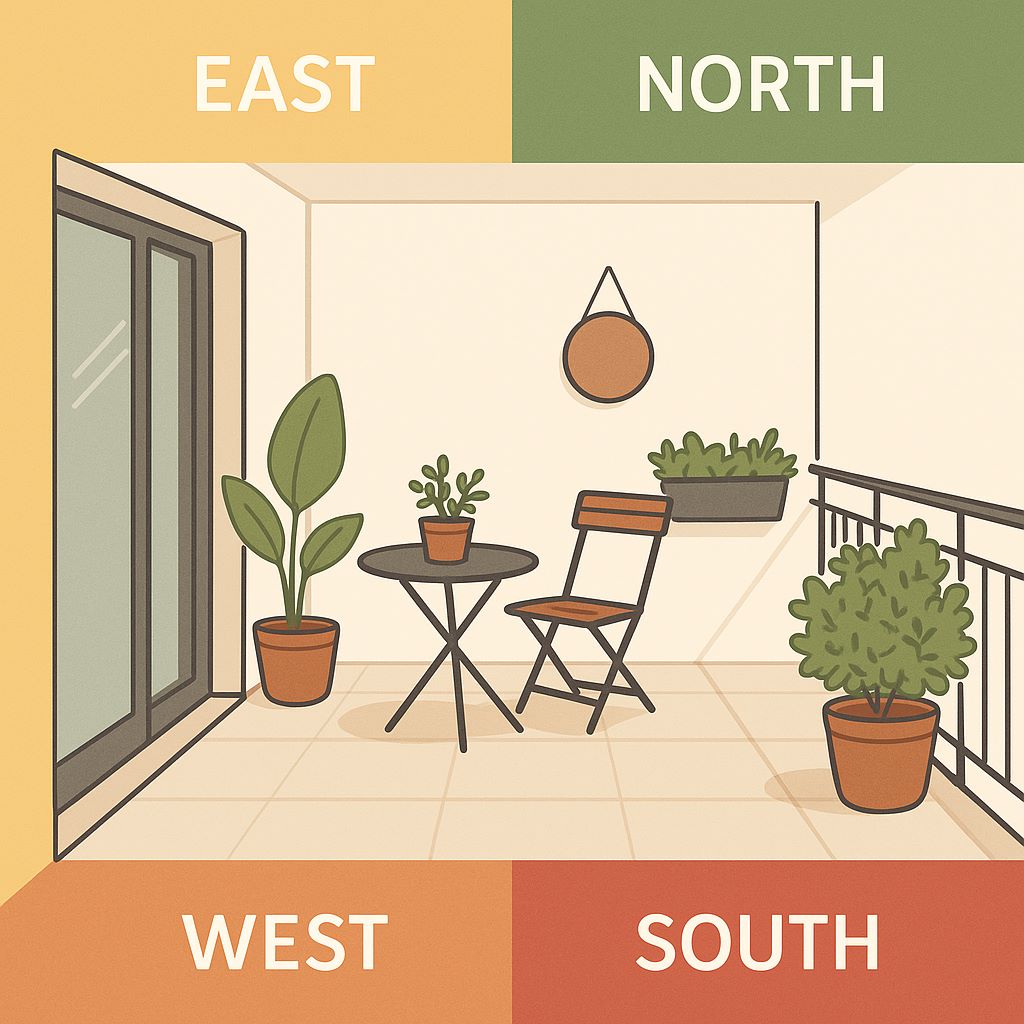
East-Facing Balcony
- Best for morning sunlight.
- Ideal for yoga and meditation.
- Colours: soft blue, green, white.
North-Facing Balcony
- Most balanced light throughout the day.
- Perfect for gardens.
- Add water elements or metal décor.
West-Facing Balcony
- Harsh evening sun.
- Use bamboo blinds or outdoor curtains.
- Prefer earthy colours.
South-Facing Balcony
- Strong heat.
- Use stone flooring, tall plants, earthy tones.
- Avoid synthetic décor.
Balcony Do’s & Don’ts
DO’S
- Use waterproof and weather-resistant materials.
- Maintain clutter-free arrangements.
- Ensure proper drainage.
- Use warm lighting.
- Add suitable plants.
- Maintain railing height (minimum 1 meter).
DON’TS
- Avoid heavy furniture on weak slabs.
- Don’t block airflow.
- Avoid sharp-edged furniture.
- Don’t use slippery flooring.
- Avoid overusing artificial turf.
Common Mistakes in Balcony Design
- Overcrowding the space with too many objects.
- Using indoor furniture that gets damaged outdoors.
- Poor lighting or no lighting at all.
- Ignoring railing safety standards.
- Selecting décor unsuitable for local weather.
- Excessive colour combinations.
- Overuse of artificial grass.
Expert Remedies & Practical Corrections
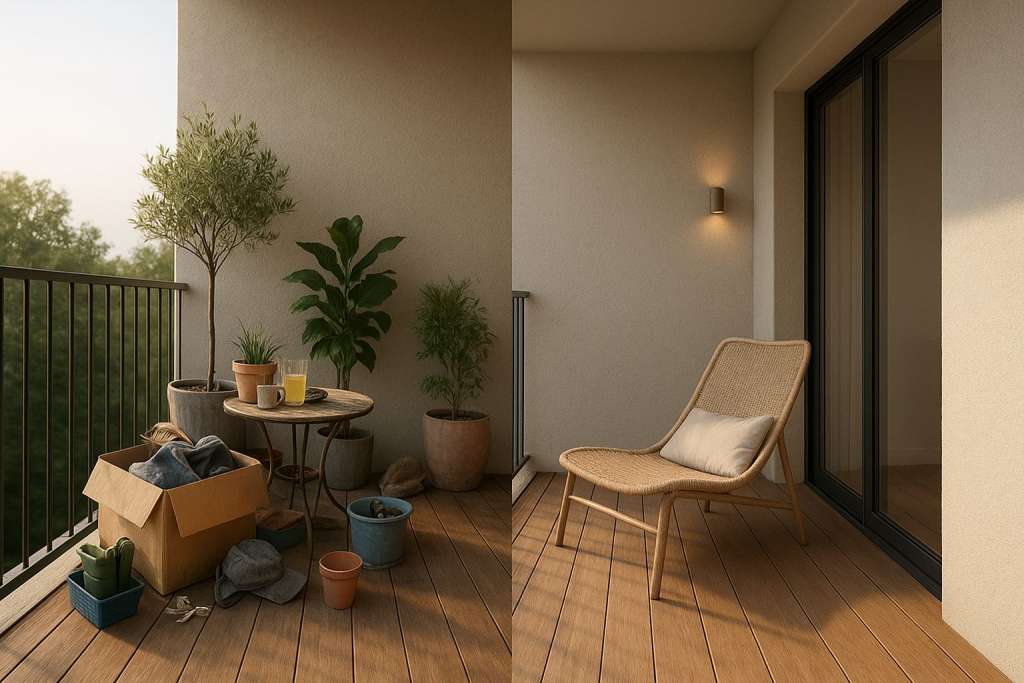
1. Overcrowded Balconies
Shift plants to vertical shelving, use 3-colour palette rule, replace bulky furniture with compact, multipurpose designs.
2. Harsh Sunlight Areas
Install UV-blocking blinds, add tall plants for shade, use stone or ceramic flooring.
3. Dull Balconies
Add warm LED lights, light-coloured flooring, reflective décor.
4. Small Balcony Fixes
Use wall-mounted tables, light colour palette, add mirrors to create visual depth.
5. Vastu Remedies
- East/North → light neutrals, plants, mild décor.
- South/West → shielding elements like blinds or pergolas.
- Avoid fire elements in the North direction.
Case Study: 40 sq. ft Balcony Transformation
Location: Pune
Balcony Type: Small North-facing balcony
Problems: No lighting, cluttered plants, plastic chairs, low usability.
Solutions Implemented:
- Created vertical garden wall.
- Installed foldable wooden table.
- Added warm LED outdoor wall lights.
- Introduced green + beige colour theme.
- Installed interlocking deck tiles.
- Added a compact storage bench for multipurpose use.
- Applied Vastu guidelines suitable for North direction.
Results:
The balcony now serves as a reading corner, morning tea spot, and relaxing greenery zone. The aesthetic appeal also improved adjoining living room ambience.
Final Summary
Whether your home has a compact balcony or an expansive terrace, the right balcony design ideas can transform it into your favourite relaxation spot. By using practical space-saving setups, climate-appropriate materials, Vastu-based placement, and expert-approved design principles, you can create a balcony that is aesthetic, functional, and uplifting.
Balconies contribute to wellness, fresh airflow, sunlight exposure, and overall home aesthetics. Start small, keep the décor minimal, and prioritize utility. The best balcony design ideas are those that blend beauty with purposeful functionality.
FAQs on Balcony Design Ideas
1. How do I decorate a small balcony?
Use foldable furniture, vertical planters, compact seating, and light colours.
2. What flooring is best for balconies?
Deck wood tiles, anti-skid porcelain tiles, terracotta tiles, or composite decking.
3. Which plants suit balcony environments?
Areca palm, snake plant, jade, money plant, bamboo, spider plant.
4. How to make a balcony private?
Use bamboo screens, tall planters, curtains, or frosted glass.
5. What lighting works best outdoors?
Warm LED wall lights, string lights, or solar lights.
6. How can I make my balcony Vastu-friendly?
Prefer East/North orientation, avoid fire or red elements in North.
7. Can a balcony be used for work-from-home?
Yes—use a foldable table, good lighting, shade, and ergonomic seating.
8. How to protect balcony furniture from rain?
Use waterproof covers, select weatherproof furniture, or add overhead shelter.
After this you can check out other Blogs-
