


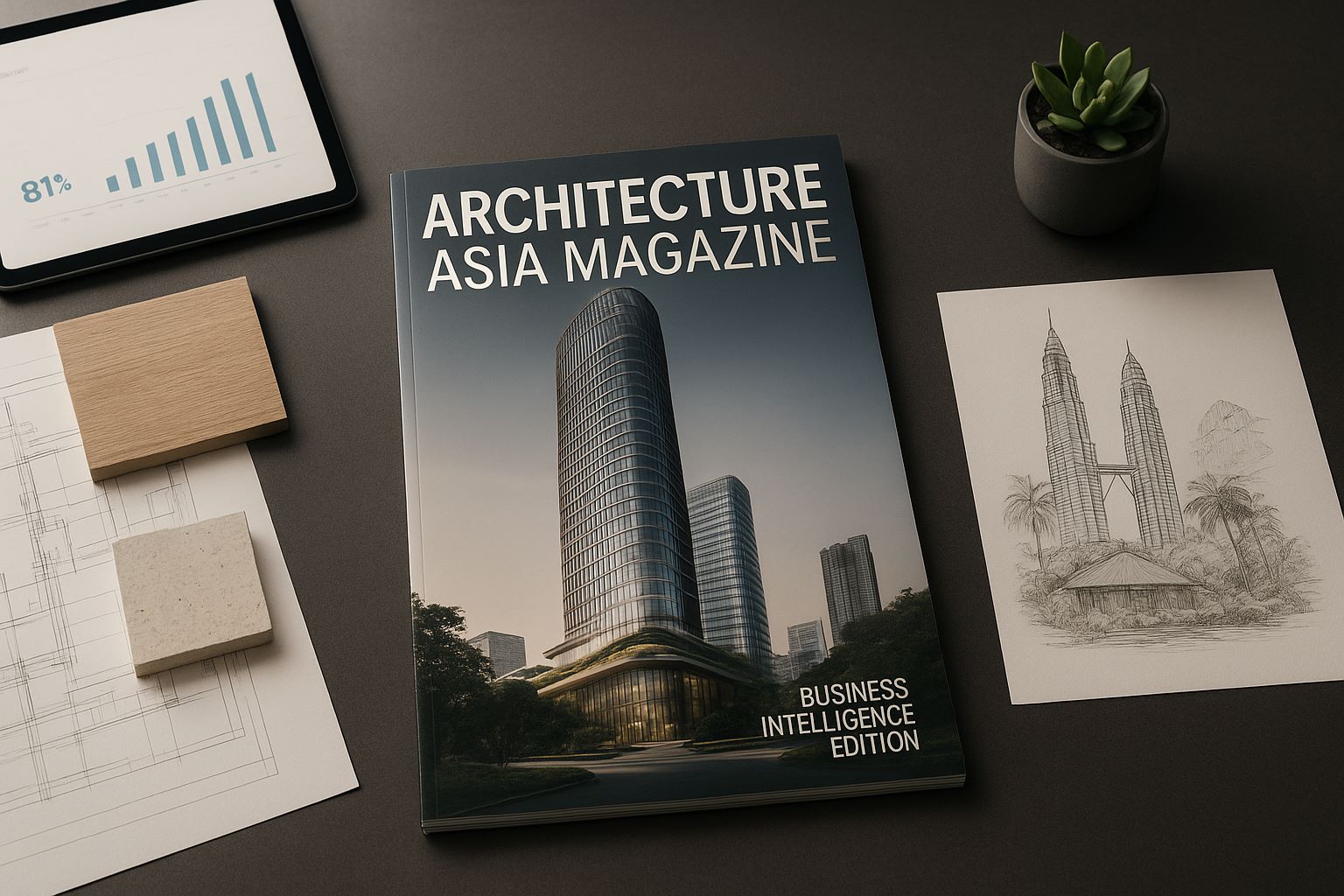

In the rapidly evolving world of architecture, design and construction across Asia, staying informed and ahead of trends is more than an aesthetic exercise—it’s a strategic business advantage. For Indian business leaders who are engaged in real estate, hospitality, infrastructure, design-led ventures or interior-fit-outs, the insights gathered from regional architecture and design magazines can steer key decisions. One such pivotal publication that merits attention is Architecture Asia Magazine—and particularly the version featured via Architect Plus Interior (via the website architectplusinterior.com).
In this article, we will explore why Architecture Asia Magazine deserves your focus, what kinds of content it offers, how Indian business professionals can use it to their advantage, and how to maximise the value you get from reading (or subscribing to) this resource. Let’s begin by understanding the region and the publication’s relevance.
Table of Contents
1. Why Architecture Asia Matters: Regional Context & Business Implications
1.1 The Asia-Pacific Boom in Architecture & Design
Asia, and especially South Asia and Southeast Asia, is witnessing an unprecedented construction, infrastructure and real‐estate surge. From new airports and metro lines, to high-rise office towers, luxury hotels, mixed-use residential complexes, and design-forward retail spaces. These projects aren’t just about building structures—they are about brand value, user experience, sustainability, and global standards.
For an Indian businessperson, this means: the competition isn’t just local; the benchmarks are regional and global. Staying abreast of what’s happening across Asia gives you early visibility into best practices, emerging design norms, material innovations and business-models you might replicate or adapt.
1.2 What “Magazine” Means in This Context
When we speak of a magazine in architecture and design, it is far more than a glossy publication. It’s a curated insight-platform. It profiles significant projects, interviews leading architects/designers, showcases new materials and technologies, tracks sustainability/regulatory shifts and often analyses market dynamics from a business lens.
Hence, Architecture Asia Magazine (through the lens of Architect Plus Interior) becomes not just a design inspiration board, but a strategic dossier for business leaders.
1.3 Business Relevance for Indian Professionals
- Real estate & developers: Understanding how high-end projects are conceptualised in Singapore, Malaysia, Dubai, etc., helps benchmark your own projects in India.
- Commercial landlords & offices: The design and architecture of commercial real-estate affects tenant retention, rental premium and brand reputation.
- Hospitality operators: For hotel chains or luxury resorts, design narratives matter for guest experience. Seeing how Asia is innovating gives you competitive insight.
- Interior and fit-out vendors: Exposure to regional design trends, materials and specification helps up‐the‐ante in quotations and service offerings.
- Sustainability & ESG leads: Architecture magazines often cover green buildings, new certifications and technology—areas that are increasingly business-critical.
Thus, for Indian business leaders, picking up the right architecture magazine is not a luxury—it’s a smart investment in information.
2. Introducing Architecture Asia Magazine via Architect Plus Interior
At the heart of our recommendation is the Architect Plus Interior portal which positions itself as a gateway to Architecture Asia Magazine. The website provides access to rich editorial content, interviews, project-profiles and business-oriented articles relevant to Asia’s architecture and design scene.
2.1 What Sets It Apart
- Regional focus: While many design magazines are US/Europe-centric, the content here is Asia-centred—a direct relevance to India and neighbouring markets.
- Business orientation: Beyond aesthetics, many articles explore budgets, procurement, project delivery challenges and design‐business links.
- Accessible format: The online portal (architectplusinterior.com) makes it easy for busy professionals to browse, search and filter topics of interest.
- Wide reach: It covers cities like Singapore, Kuala Lumpur, Bangkok, Hong Kong, and also South Asia—giving you cross‐border learning.
- Design + Technology + Strategy: Beyond looks, you’ll read about materials, façade engineering, lighting design, automation, sustainability, and cost-optimization.
2.2 How Indian Business Users Should Approach It
- Identify your objective: Are you looking at a luxury-residential development in Mumbai? Or planning a branded hotel in Goa? Then filter by similar projects in Asia on the magazine-site and draw parallels.
- Use case study insights: Read about project budgets, timelines, procurement challenges and design decisions—then ask yourself how you would apply them in your context.
- Monthly digest: Allocate time (e.g., 30 minutes/month) to read the latest issue/online update—consistency matters.
- Build a reference library: Save articles of relevance in a business folder so you can share with your design/engineering team, or refer back when bidding or briefing.
- Apply to your network: The material can also help you brief your architects/contractors or justify spending decisions to stakeholders (CEOs, owners, investors) with credible regional benchmarks.
3. Content Categories: What You Get & Why It’s Valuable
Here’s a breakdown of typical content categories in Architecture Asia Magazine, via Architect Plus Interior, and what you should extract from each:
3.1 Project Profiles & Case Studies
These are detailed stories of specific buildings: office towers, residential blocks, hospitality resorts, coworking hubs, etc.
Why valuable: You see design challenges, budget ranges, contractor issues, architectural styles, materials chosen, sustainability features.
What to pull out:
- Project size & location (sq. ft, storeys)
- Architect / design team
- Key design features (façade, lobby, atrium)
- Budget / procurement lessons
- Operational outcomes (energy usage, tenant feedback)
3.2 Interview Features with Thought-Leaders
Experts in architecture, design, sustainability and project delivery share insights.
Why valuable: These are often “behind the scenes” thoughts—what worked, what didn’t, future outlook.
What to pull out:
- Predictions on material/technology trends
- Business advice (how to engage architects, how to budget for design)
- Regional/regulatory insights (for Asia and by extension India)
3.3 Technology, Innovation & Material Trends
Features on new façade systems, smart-building technologies, interior systems, lighting, acoustics, BIM, VR, sustainability technologies.
Why valuable: Business cost-structures and competitive positioning in design/real-estate increasingly depend on technology choices.
What to pull out:
- Cost vs benefit of a new material or system
- Time savings or operational savings from a tech adoption
- Indian-context applicability (climate, cost pressures, vendor availability)
3.4 Design & Aesthetic Trends
Stories about architectural styles, regional design motifs, local-culture-infused architecture, adaptive reuse, etc.
Why valuable: Aesthetics influence brand, value perception, customer attraction—particularly in hospitality, retail and residential segments.
What to pull out:
- Style cues you might adopt (courtyard, greenery, biophilic design)
- How aesthetics impact client/tenant decision-making
- Cost-impact of certain design luxury features
3.5 Sustainability & Policy Insights
Coverage on green certifications (LEED, BREEAM, IGBC), material certifications, regulatory changes and climate-responsive architecture.
Why valuable: Sustainability is no longer optional. Indian business leaders must plan for regulatory compliance, investor ESG demands and operational efficiency.
What to pull out:
- Certification cost vs benefit
- Regional regulations to watch (Asia/India)
- Operational savings from sustainable design
3.6 Opinion & Market Analysis
Articles forecasting market shifts, regional growth corridors, design-market segmentation, risk mitigation in project delivery.
Why valuable: Helps you anticipate what’s next—where to invest, what types of properties will command premium, where design spending is headed.
What to pull out:
- Regions/cities in Asia to watch (for Indian investors)
- Design segments that are growing (co-living, mixed-use, wellness-centres)
- Budget pressures and opportunities for value engineering
4. How Indian Business Leaders Can Leverage This Magazine for Competitive Advantage
Having a good architecture & design magazine is one thing—using it well is another. Here’s how you, as an Indian businessperson, can extract actionable value.
4.1 Integrating into Your Project Planning
When you launch a new project (residential, commercial, hospitality), start by reviewing recent issues of Architecture Asia Magazine (via Architect Plus Interior). Do this early—before detailed design starts. Use relevant case studies to shape your design brief. Ask: “Which façade system did a comparable Asian project use?” “Which sustainable feature improved tenant retention in a similar market?” This gives you head-start.
4.2 Vendor & Contractor Briefing
Present relevant magazine articles to your design/engineering team or contractor during tendering or briefing. Example: “See this hotel project in Bangkok where they cut 20% cooling load by using a double-skin façade.” Your team then has your requirement anchored in a credible reference.
4.3 Benchmarking Costs & Outcomes
It’s easy to get trapped in local cost assumptions. But what did an iconic Asian-city office tower spend (in USD or SGD) per sq ft? What return did it get in rental premium? Articles in the magazine often provide these data points. Translate them to Indian rupee context and use them in feasibility modelling.
4.4 Innovation Adoption
If you’re thinking of using new materials, smart building tech or sustainable systems, the “technology & innovation” section gives you early look-ins. Example: a case study of a Kuala Lumpur tower using vacuum-insulated glazing to reduce heat gain. You evaluate if you can replicate or adapt in Mumbai or Hyderabad.
4.5 Staying Ahead of Market Trends
Use the opinion and market-analysis articles to monitor where clients/tenants will shift. For example, if you develop coworking spaces or mixed-use properties, you’ll want to follow what is being done in Singapore, Malaysia and how tenants’ preferences are evolving. Armed with that insight, you can position your project for tomorrow’s demand.
4.6 Risk Management & Design-Value Communication
When you talk to investors or banks about your project, being able to say: “We followed design standards seen in an award-winning Asian tower, referenced in Architecture Asia Magazine,” adds credibility. It helps communicate that you’re not guessing; you’re benchmarking. That lowers perceived risk and may help your cost of capital or negotiation.
4.7 Continuous Learning & Team-Building
Encourage your project team (designers, project managers, procurement leads) to follow the magazine. Set aside a monthly 30-minute internal “design insights” meeting where someone briefs an article and discusses how to apply it. This builds internal capability in your organisation—no longer you always consulting external experts; you have internal informed thinking.
5. Spotlight: How to Use a Specific Issue of the Magazine
Here’s a practical step-by-step method you can follow when a new issue of Architecture Asia Magazine lands (or you browse it via the Architect Plus Interior portal):
- Flip through the table of contents – identify 2-3 articles relevant to you (e.g., one project in Southeast Asia similar to what you’re launching, one tech/material article, one market-analysis piece).
- Download/save those articles into a “Project Reference” folder in your cloud-drive.
- Create a summary sheet for each article: This includes article title, project/site, key numbers (budget, size, materials), key learnings (what improved performance, what cost was saved, what resulted).
- Ask your design/engineering team to evaluate: “Can we implement similar façade? What will be our cost vs. local supply? What modifications needed for Indian market (climate, vendor availability, regulation)?”
- Prepare a brief for meeting with stakeholders: Use 1-2 slides summarising “What the Asian benchmark did” + “How we will adapt it in Indian context” + “What cost, what outcome we expect”.
- Track outcome metrics: Once your project is underway, compare actuals vs. what you learnt from the article. Was the presumed saving or outcome achieved? This creates institutional learning for your next project.
This process turns a passive read into an active strategic tool.
6. Case Examples & Indian Relevance
While the magazine focuses on Asia broadly, the learnings are highly relevant to India. Let’s examine a couple of hypothetical examples of how Indian real estate or hospitality businesspeople might apply insights:
Example A: Luxury Hotel Project in Goa
You are planning a boutique luxury resort in Goa, targeting high-end international and domestic guests. In the magazine you find a project in Bali or Kuala Lumpur: “Rainforest resort with open-air lobby, natural stone flooring, passive cooling via design, and smart lighting to reduce electricity spend by 30%.”
Your application: You extract concept: open-air design + passive cooling + premium stone finish + smart lighting. You ask your architect: how feasible in Goa’s climate (monsoon, humidity). You ask vendor: cost of stone vs imported or local. You anticipate brand story: “Inspired by leading Asia resort design.” You build that into your marketing.
Business benefit: You differentiate your resort, can justify higher room rate, set cost expectations, improve sustainability credentials for rentals/PR.
Example B: Grade-A Office Tower in Mumbai
You develop a 25-storey office tower targeting multinationals. In an issue of the magazine you read about a Singapore tower that achieved 15% higher rental by offering high-ceiling lobbies, greenery-integrated terraces, and smart building services.
Your application: You ask your developer team: what incremental cost would it be in Mumbai to provide high ceiling lobby + green terrace + smart building services? What rental uplift can you expect in that micro-market (Nariman Point, BKC etc.)? Use article data as benchmark.
Business benefit: You position your project at a premium segment, justify spend to investors, anticipate lease-up strategy, differentiate from the many standard towers in market.
These are just two examples; the possibilities are much wider when you use the magazine strategically.
7. What to Look for When Subscribing or Browsing
When you subscribe to an architecture magazine (or access via the portal like Architect Plus Interior) here are some criteria to evaluate in order to maximise ROI of your time:
- Relevance of content: Does it cover Asia and projects similar to yours? Make sure it’s not purely aesthetic/celebrity architect covers.
- Business & budget focus: Are budgets, cost-outcomes, ROI discussed? If you’re a business professional, you want more than just pretty pictures.
- Technical depth: Is there discussion on materials, systems, sustainability, vendor sourcing? That’s where practical value lies.
- Regional/regulatory insight: Since you’re in India, you’ll benefit from comparative insight from regional peers.
- Accessibility: Does the website/portal allow you to search past issues, download PDF, tag articles, save relevant items?
- Actionable case studies: Are there take-aways you can apply or modify?
- Timeliness: Architecture and technology evolve quickly—ensure the magazine keeps pace.
8. Overcoming Common Challenges & How to Use the Magazine Effectively
While the potential is high, Indian business professionals often face certain challenges when using architecture/design magazines for business advantage. Let’s review these and how to overcome.
8.1 Challenge: Too much design, not enough business data
Solution: Skip purely aesthetic features. Instead focus on case studies that provide numbers, budgets, challenges, outcomes. Use those to build internal business questions: cost, ROI, feasibility.
8.2 Challenge: Regional differences (Asia vs India)
Solution: Always ask: “What’s different in India’s context (climate, regulation, cost, labour market)?” Use the Asian project as a benchmark but then adapt locally. For example, a façade system used in Kuala Lumpur may need cheaper local equivalent in India.
8.3 Challenge: Time management for busy business leaders
Solution: Don’t attempt to read every article. Choose 2-3 relevant per issue. Keep a list of “my priority areas” (e.g., sustainable hotel design, coworking office towers, material innovation). Have your team summarise key insights for you.
8.4 Challenge: Translating insights into action
Solution: Use structured approach: For each article you select, ask 3 questions:
- What is the main idea / innovation?
- How can this be applied (or adapted) in India or in my project?
- What are the cost/benefit implications for us?
Create a “take-action” list for your next meeting with architects/contractors.
8.5 Challenge: Staying current
Solution: Set an internal schedule. For example—every month set aside 30 minutes, or appoint a team member as “design-insights champion” who sends a summary email with 1 relevant article and its implications for your business.
9. Future Opportunities: What to Expect in Architecture Asia in Coming Years
Looking ahead, and based on what Architecture Asia Magazine has begun covering (via the portal), here are key trends business leaders should monitor—and you’ll find increasingly covered articles on these:
- Smart buildings & IoT integration: Architecture isn’t just about form—it’s now about data, sensors, building user experience. Expect younger buildings in Asia to integrate AI, occupant analytics, predictive maintenance. Indian projects will adopt these too; being ahead of this curve is a business advantage.
- Well-being design: Biophilic architecture, nature-integrated spaces, indoor air quality, wellness zones—these will influence leasing premiums and guest/tenant satisfaction.
- Adaptive reuse and sustainability retrofits: Rather than building new, older structures will be retrofitted. The magazine already covers Asian examples of old factories or heritage buildings turning into hotels or coworking hubs. India’s massive stock of near-end-of-life buildings means this is highly relevant.
- Regional material innovation: Asian manufacturers (India, China, Southeast Asia) are creating materials (façade panels, smart glass, recycled composites) tailored to tropical climates. Business leaders should adopt smarter procurement based on insights from the magazine.
- Design for circular economy & resilience: Climate change, regulation and cost pressures are forcing design to be more resilient and circular. Buildings in Asia increasingly focus on energy self-sufficiency, remote operations and flexible usage.
- Experience-led architecture: In hospitality and retail especially, architecture becomes part of the brand story and guest/consumer experience. Indian business owners in these segments will benefit from learning how Asian peers are doing this.
By reading Architecture Asia Magazine and using it as an insight vehicle, you position your business to not just react but to lead.
10. Practical Tips: Getting Started This Week
To hit the ground running, here’s a simple 7-step action plan you can implement right now:
- Subscribe or bookmark the portal where Architecture Asia content is available (via Architect Plus Interior).
- Pick your first issue/article relevant to your business (e.g., hospitality design, office tower, retail cultural centre).
- Assign a team member to summarise key learnings in 200 words and present at next project-team meeting.
- Create one slide: “What we learnt” + “How we apply it” + “Estimated cost/benefit for our project”.
- Add a monthly meeting: 30 minutes “design-insights talk” where someone shares a new article and discusses adaptation.
- Maintain a “Design-Benchmark Folder”: Each article you apply becomes a new document labelled “Benchmark: [Project Name] – Key Features”. This becomes your internal library.
- Evaluate for your next project: When you start your next project, refer to folder, pick 1–2 Asian benchmarks, ask how you will adapt, and include this in your briefing to architect/contractor.
This way you transform reading into business impact.
11. Why Now is the Time for Indian Business Professionals to Invest in Design Intelligence
Several factors make now an opportune time:
- Market competition is increasing: Indian real estate/hospitality/office development is crowded. Design differentiation is a key way to stand out.
- Tenant/client expectations are rising: Tenants now expect modern offices with high-quality design, wellness features and tech integrations. Guests expect resorts with design stories.
- Sustainability and ESG are no longer optional: Investors and regulators are pushing for greener buildings; design intelligence helps compliance + branding.
- Cost pressures demand smarter design decisions: Material costs, labour inflation, energy costs—design decisions that save costs or enhance returns are valuable.
- Knowledge gap exists: Many Indian projects still replicate outdated models. By referencing what’s happening across Asia (via Architecture Asia Magazine), you gain an edge.
Thus, reading and leveraging a magazine like this is strategic—not just curiosity.
12. Common Myths & Misconceptions About Architecture Magazines
Let’s dispel a few myths:
- Myth: These magazines are just pretty pictures.
Reality: The best ones (including Architecture Asia via Architect Plus Interior) include business data, budgets, procurement insights, region-specific discussions—not just visuals. - Myth: They are only for architects/designers.
Reality: When you go beyond aesthetics, the information is actionable for business decision-makers too—anyone who commissions or invests in built-form assets. - Myth: They aren’t relevant locally (India).
Reality: Asia shares many climatic, regulatory, cost and supply-chain traits with India. The magazine’s regional focus is precisely why it’s more relevant to Indian professionals than a purely western-centric magazine. - Myth: You’ll never implement anything you read.
Reality: If you follow the process outlined above—filter, summarise, adapt—many insights become low-cost high-value prototypes for your next project.
13. Key Takeaways
As we draw to a close, here are the essential take-aways for an Indian businessperson:
- Architecture Asia Magazine (as accessed via Architect Plus Interior) is a high-value resource—one that goes beyond design glamour and gives business-oriented insights.
- You should approach it not just as a reader, but as a strategist—looking for case studies, budget data, outcomes you can benchmark.
- Use it to: improve your project brief, inform procurement, engage stakeholders, reduce risk, differentiate your project, and enhance investor/tenant appeal.
- Develop internal processes (team meeting, summary folder, slide brief) so reading becomes application.
- The best time to engage is now—given design expectations, competitive pressure and cost dynamics in India.
- Adapt insights thoughtfully—you are not copying, you are benchmarking, localising and innovating.
- The value you derive will depend on your intentionality—how you translate reading into action, not just passive consumption.
14. Final Words
In an era where built-spaces are more than just bricks and mortar—they are brand canvases, experiential hubs, sustainability platforms and business assets—a publication like Architecture Asia Magazine becomes more than a design digest. It becomes a strategic asset in your decision-making toolkit.
For Indian business leaders who must balance cost, brand, innovation, sustainability and user-experience, accessing this regional insight via the Architect Plus Interior portal gives you a competitive edge. It’s about smart reading—then smarter acting.
