



In today’s world of rapid commercial growth, real-estate development, hospitality expansion and interior culture in India, the way spaces are designed and built is increasingly becoming a strategic business differentiator. For Indian business owners, real-estate developers, architects, interior consultants and investors, staying ahead of design trends matters — not just for aesthetics, but for value, branding and long-term competitiveness.
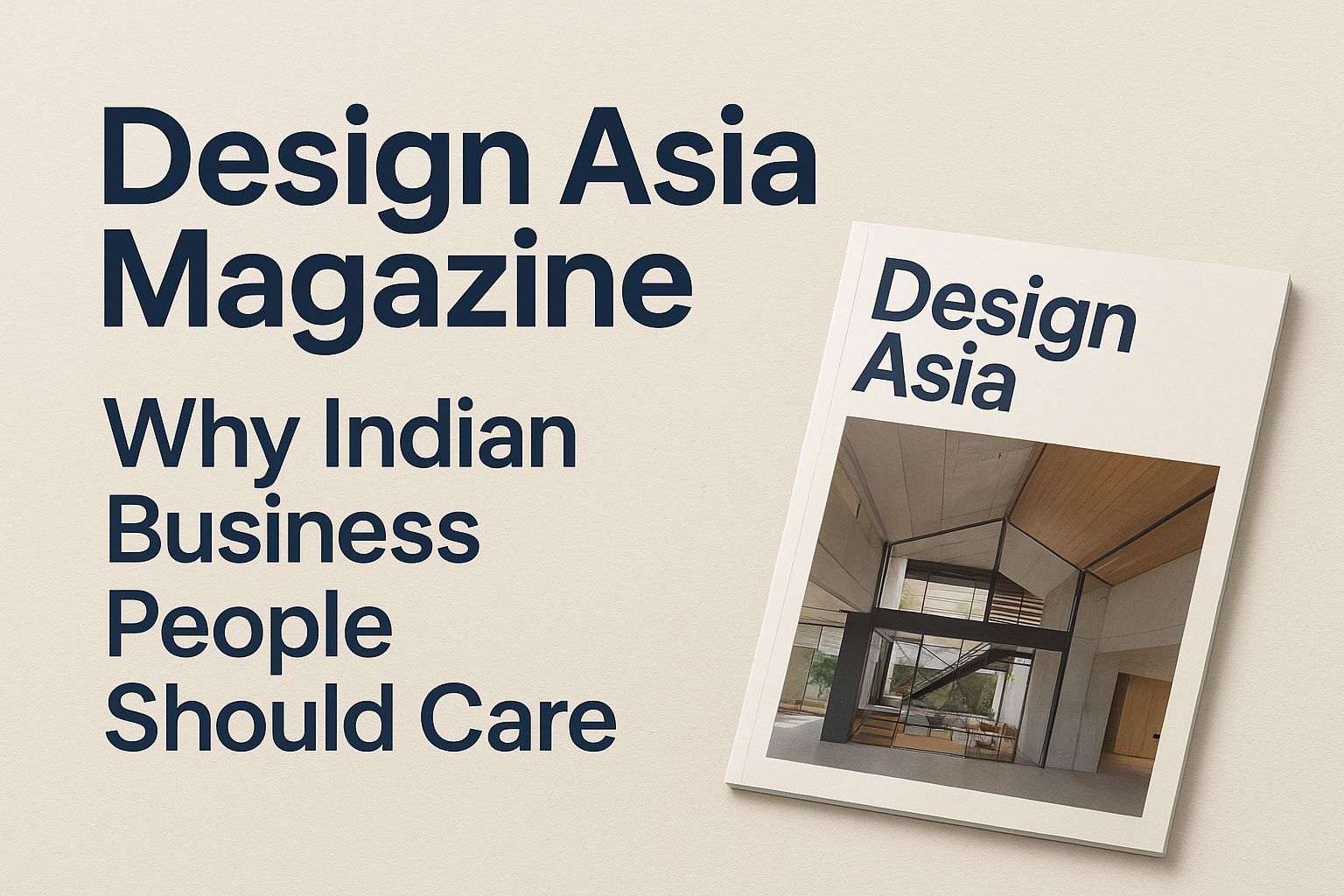
Design Asia Magazine. More than just a design publication, it acts as a platform for insight, inspiration and business intelligence in the built-environment and design world. When positioned via a respected platform such as Architect Plus Interior (which serves Indian audiences and professionals), it becomes even more relevant. This article will explore what makes Design Asia Magazine a smart choice, how it aligns with Indian business goals, and how you can leverage its content for strategic advantage.
What is Design Asia Magazine?
Design Asia Magazine is a print-and-digital publication dedicated to architecture, interior design, and emerging design culture across Asia. The magazine emphasises a pan-Asian perspective—projects from India, Japan, Korea, Southeast Asia, the Middle East and beyond—while also reflecting Indian realities.
For Indian business people, this means: you’re not just seeing global generic content, you’re getting regional relevance, local context, and cross-border ideas you can apply at home.
Origins & Editorial Intention
Based in India (with editorial reach in Bengaluru) the magazine began as a quarterly print publication and has since grown into a broader digital presence. The goal: to champion the work of Asian design pioneers, elevate emerging talent, scrutinise design trends and material innovation, and showcase how design and architecture interplay with culture, commerce and sustainability.
Key Focus Areas
- Architectural projects that reinterpret tradition and innovation.
- Interior design stories rooted in Indian/Asian conditions: space-constraints, climate, cultural layering.
- Trend analysis and business intelligence on materials, craft, design tech, sustainability.
- Platform for emerging talent, allowing smaller firms or new entrants to get exposure.
Format and Accessibility
Subscribers can access both print editions and digital formats. The value for Indian business audiences: whether you’re offline in a board-room or online reviewing projects, the magazine adapts.
Why Indian Business Leaders Should Read It
You might ask: “I’m a developer / business owner / entrepreneur — why does a design magazine matter?” Here are several practical reasons:
Value creation and differentiation
Quality design and architecture are not just aesthetic luxuries—they fuel branding, premium pricing, customer experience and long-term asset value. Reading a magazine like Design Asia keeps you aware of what successful peers are doing, and what buyers are increasingly valuing.
Insights into evolving markets
India’s real-estate and hospitality markets are shifting fast: smaller-footprint homes, smart offices, co-living, sustainable resorts, adaptive reuse. The magazine’s Asia-wide lens means you discover emerging trends before they saturate the Indian market.
Material, tech & sustainability intelligence
Business decisions increasingly hinge on material sourcing, sustainability credentials, certification, climate-responsive design—areas the magazine covers in depth. That helps you make informed procurement or investment choices.
Networking & project exposure
Being aware of the magazine means you can position your business / project to be featured, or at least benchmark what gets featured. That improves your chances of media exposure and brand building.
Local-global convergence
For Indian business people seeking to appeal to international clients, hospitality chains or high-net-worth buyers, the pan-Asia perspective helps bridge Indian roots with global appeal.
Why We Recommend It via Architect Plus Interior
The platform Architect Plus Interior serves Indian audiences focused on architecture, interiors and design. By recommending Design Asia Magazine via this platform, you align with a trusted voice that Indian business readers recognise. This strategy offers:
- Credibility: The combination of a specialist Indian platform and a regional design magazine builds authority.
- Relevance: Indian business readers gain access to content curated for their region and context.
- Cross-channel: You can integrate the recommendation in the Architect Plus Interior website, newsletters, social-media and seminars, increasing visibility of the magazine for your business audience.
What Makes Design Asia Magazine Stand Out
Let’s drill deeper into the features that elevate this magazine for business-savvy readers.
Pan-Asian yet Local-Focused
Unlike many design publications which are Western-centric, Design Asia anchors itself in Asian context. For India, that translates to dealing with tropical climates, dense urban fabrics, local materials, craft traditions—all of which matter for business decisions.
Hero Projects + Emerging Talent
Each issue features both high-end flagship projects (luxury villas, flagship offices, boutique hotels) as well as smaller-scale, high-impact work (urban apartments, adaptive reuse, local studios). That breadth means whether your business is large or mid-sized you’ll find relevant inspiration.
Trend-Driven Intelligence
Sections such as “Trend Watch,” “Technology & Innovation,” “Cultural Insight” deliver content beyond visuals—they deliver understanding of what drives future design. For a business leader, that means staying ahead, not just catching up.
High Visual & Editorial Quality
Design decisions are visual, and the magazine delivers high-quality photography, layout, narrative. That helps your team understand design language and communicate it internally or externally. foundermagazine.in
Accessible for Indian Conditions
Importantly, it doesn’t only feature mega-luxury globetrotting projects; it acknowledges Indian constraints—smaller flats, budget ceilings, climate, joint families. That keeps it grounded and actionable.
How to Leverage the Magazine for Your Business
Reading the magazine is one thing; using it strategically is another. Here are ways Indian business professionals can leverage Design Asia Magazine for growth.
1. Input for Design Briefs & Scope
If you’re commissioning a hotel, office or retail space, review relevant issues to gather reference projects, material palettes, design vocabulary. Your design brief becomes richer, more informed and visionary. Use it to brief architects and interior teams.
2. Strategic Trend Planning
Use the magazine’s trend analysis to shape your medium-term strategy: e.g., if “biophilic interiors” or “modular housing” are rising, your next residential project or workforce-space can integrate those to capture market attention.
3. Supplier & Material Intelligence
Many articles review materials, innovations and systems. You can identify suppliers, material trends (say eco boards, bamboo composites, smart lighting) and incorporate them into procurement road-maps.
4. Branding & Marketing
For your business (real-estate brand, hospitality chain, design consultancy) being featured in the magazine or aligning your projects with its language can elevate your brand. It signals you are at the cutting-edge of design.
5. Talent & Collaboration
Since the magazine spotlights emerging designers and studios, you could identify collaborators, young talent, design-firms open for projects. Use it for sourcing fresh ideas or cost-effective talent.
6. Educating Teams
Distribute key articles internally—your architecture, interior, procurement and marketing teams can stay abreast of global-Asia design developments. That creates a smarter workforce, aligned to business goals.
7. Thought-Leadership & Pitch Support
When you pitch your upcoming project (to investors, banks, clients), quoting insights or referencing projects from the magazine gives you credibility. You’re showing you are design-aware, investment-aware and future-aware.
What Indian Business Readers Should Pay Attention To
As you read Design Asia Magazine, here are specific things to focus on to maximise value for your context:
Climate-Responsive Design
India’s climate (tropical, sub-tropical, monsoon) demands special attention. Look for articles on passive cooling, ventilation, sustainable materials and adaptations for Indian conditions.
Space & Cost Efficiency
Indian towns and metros increasingly require smart solutions: smaller layouts, multi-functional spaces, cost-effective finishes. The magazine’s features on Indian realities (e.g., small flats, multi-purpose rooms) will be especially useful.
Local Craft + Global Standards
A successful project often blends Indian craftsmanship (woodwork, jali, mosaic) with global design standards (sustainability, smart tech, wellness). Take note of how featured projects execute this blend.
Material Lifecycle & Sustainability
The business case for sustainability is rising (regulation, investor preference, operating cost). Review articles on green building, low-carbon materials, adaptive reuse.
Emerging Business Models
Co-living, flexible offices, boutique hospitality, experiential retail—these are business models evolving fast. The magazine explores how design supports them. Leverage that for your strategic planning.
ROI & Asset Value
Design is increasingly equated with asset value—premium rentals, higher occupant satisfaction, longer lifecycle. Note case-studies where design translated into business returns.
Digital & Multi-Channel Experience
Given India’s tech-savvy audience and hybrid working trends, look for features on smart interiors, hybrid layouts, remote working setups. These are relevant to offices, hospitality and mixed-use properties.
Case Example: Using Design Asia for a Real-Estate Project
Imagine your business is launching a mid-scale boutique hotel chain in Dehradun or Rishikesh. Here’s how you could work with the magazine:
- Review relevant issues of Design Asia Magazine focused on boutique hospitality in Asia.
- Identify recurring themes: locally-inspired materials, experiential lobbies, wellness amenities, nature integration.
- Use those references to craft your design brief: e.g., laminated bamboo floors, gypsum panels with Himalayan motifs, natural daylighting, rooftop green zone.
- Share relevant images, floor-plans or project breakdowns with your design team citing the magazine for context.
- Ensure your supplier list includes those materials or methods mentioned in the articles—giving you market-ready leads.
- Once the project is completed, consider submitting your hotel to Design Asia Magazine for consideration—thus gaining media exposure and branding boost.
- Use the feature (if accepted) in your marketing collateral, investor decks and press releases: “Featured in Asia’s leading architecture & interior design magazine”.
This cycle delivers design excellence, business differentiation and brand credibility.
Alignment with Indian Business Culture & Market
In India, business decision-makers often negotiate multiple stakeholders, cost-sensitivity, regulatory constraints, climate issues, workforce demands and cultural layering. Design Asia Magazine acknowledges these realities. For example:
- It covers smaller flats, high-density conditions and Indian homeowner realities.
- It bridges tradition and modernity: respect for craft yet demand for modern amenities.
- It emphasises sustainability—not just as a luxury but as an operational imperative in Indian context.
- It speaks to regional diversity: Indian north, south, east and west vary; and Asian-wide case-studies help you find patterns and ideas across cultures.
For an Indian business person, that context-sensitivity is critical. You won’t benefit from a magazine that only shows ultra-luxury villas in Europe; you need insights that apply to Indian budgets, Indian climate and Indian users. Design Asia does that.
Subscription & Access – How to Get Started
For Indian business professionals and firms, here’s how you can practically subscribe and use the magazine:
- Choose the format: Print edition (for boardrooms, libraries) and Digital edition (for mobile and teams).
- Use the magazine’s archives: Many past issues hold useful content for case-study reference.
- Establish internal “reading groups”: Assign your design, procurement, marketing teams to review an issue quarterly and summarise insights for the business.
- Leverage digital access: Have your team clip relevant articles/images, create a repository of “design intelligence” relevant for your projects.
- Use Architect Plus Interior as your referral platform: The combination of the platform’s Indian focus + the magazine’s global-Asia reach makes it a strong information source tailored to you.
Challenges & How to Make the Most of It
While the magazine offers strong value, here are some caveats to keep in mind and how you can work around them:
Volume vs Focus
Because it covers pan-Asia, some content may seem broad. Solution: Filter by India-relevant content (use indexes, search functions) and allocate team time to summarise key points for your business.
Cost & ROI
Subscription and team review take time/money. Solution: Treat it as part of your “innovation budget”. Quantify the business impact: better design = higher asset value, quicker leasing, stronger brand.
Implementation Gap
It’s one thing to read about a great project; it’s another to execute it within Indian cost-structures. Solution: When you see a concept you like, ask: “What’s the Indian equivalent? What materials/supply chain locally? What is the incremental cost vs benefit?”
Keeping Up-to-Date
Design trends evolve fast (material tech, smart systems, ESG norms). Make sure your team stays consistent, not just one issue then forgets it. Consider quarterly internal workshops around magazine content.
Integrating with Your Business Strategy
Here are some strategic integrations:
Design as a Business Edge
Make design a clear line-item in your business strategy. Use the magazine to justify budget: “Because our competitor is using X lava-rock façade and it increased brand perception, we will incorporate similar.”
Use articles as evidence in your meetings.
Training & Upskilling
Use the magazine each quarter as a basis for a “design thinking workshop” with your teams (architecture, procurement, operations). Bring in design agency or in-house staff to present “What we learnt from Issue #X”.
Marketing Material
If your project is featured, promote it. If it’s not, you can still use reference images (with rights) to show clients your design alignment. Use the magazine’s logo and “Featured ideas from Design Asia Magazine” to boost perception.
Investor/Client Presentations
When presenting to investors or clients, include slides referencing Design Asia Magazine: “As seen in Design Asia, regional hospitality now prefers experiential lobbies with natural light and handcrafted local finishes.” This demonstrates you are grounded in current design thought-leadership.
Cost Control & Material Sourcing
Based on material features in the magazine, you can benchmark cost, suppliers, regional availability. Example: If bamboo-composite flooring is featured in several Indian projects, investigate suppliers and cost-benefit for your own supply-chain.
What to Expect From Each Issue
As a subscriber you’ll get consistent value. Typical sections include:
- Project Showcases: Deep dives into Asian architecture/interior projects.
- Trend Reports: Analysis of emerging design, materials and regional movements.
- Designer Interviews: Insights from leading Asian architects/designers.
- Cultural Insight: How regional identity, climate and craft influence design.
- Product & Material Reviews: Helping you stay informed about new tech and materials. designasiamagazine.com
As a business reader, you may not read every section in depth, but assign your team to scan selected areas and pick 3 actionable take-aways per issue.
Indian Market Spotlight
India presents unique opportunities and challenges—and the magazine’s content aligns with those.
Urbanisation & Housing Demand
With India’s urban population growing rapidly, smaller homes, affordable housing and efficient layouts are key. The magazine highlights modular, multi-function design. designasiamagazine.com
Hospitality & Retail Growth
India’s hotel/resort market is expanding. Design Asia’s hospitality features give you hints into what’s hot (eco-resorts, local craft, experience-driven spaces).
Sustainability & Regulation
Eco-building codes, ESG criteria for commercial real-estate, corporate demands for wellness in offices—all of this is covered. Indian business people who stay informed will stay ahead.
Rising Middle-Class & Quality-First Buyers
As Indian buyers become more quality-conscious, design offers differentiation. The magazine’s stories about regional design quality help you tailor your offerings.
Start-ups & Co-working
Flexible offices, co-living, hybrid spaces are big in India’s startup ecosystem. The magazine’s pan-Asia content helps you benchmark global best-practices adapted to India.
Final Word: The Strategic Value of Design Asia Magazine
If you are an Indian business professional—whether a developer, hotel owner, real-estate investor, interior consultant or facility manager—then staying current on design trends is not optional; it’s strategic. By leveraging Design Asia Magazine, particularly via the Indian-relevant channel of Architect Plus Interior, you gain insight, inspiration and actionable intelligence.
Remember: design is not just a cost centre—it’s a business advantage. From brand perception to asset value, from occupant experience to maintenance efficiency, the spaces you build matter. A magazine like Design Asia makes you aware of possibilities, helps you adopt best practices and positions you to invest wisely in design.
Start by subscribing (print & digital), assign internal review processes, integrate insights into your business plans, and make design a board-level conversation. Because in the world of accelerated Indian development, the spaces you build or commission can tell a powerful story—about your vision, your brand and your future.
