


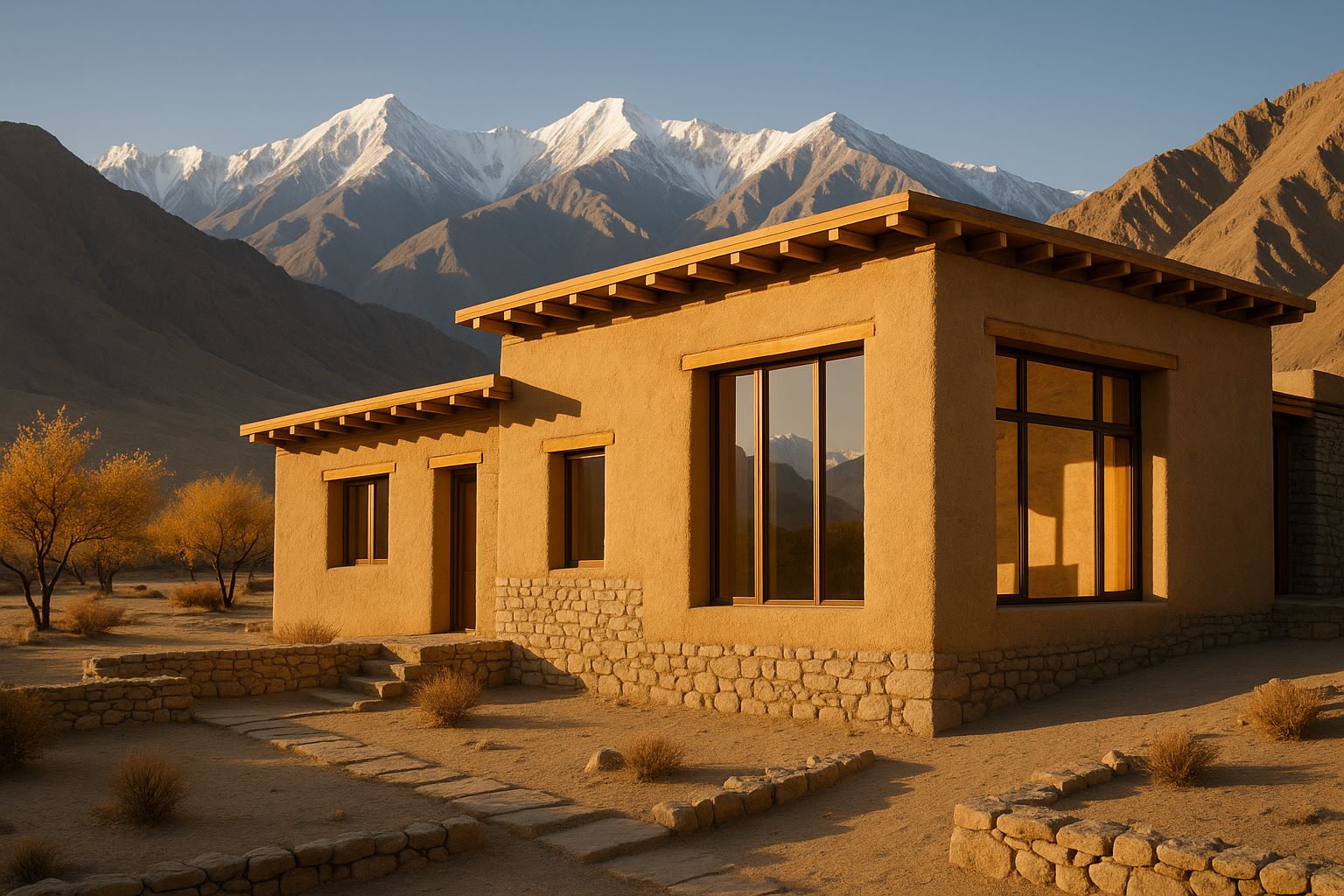

Designing a home in Ladakh is a unique architectural challenge. With freezing winters, intense sunlight, and strong winds, the region demands smart, climate-responsive design. Homeowners in Leh, Nubra Valley, and Thiksey increasingly seek homes that combine traditional building wisdom with modern comfort.
This article presents a fresh benchmark concept that sets a new standard for Ladakh house design.
Table of Contents
1. Why Ladakh’s Climate Shapes Every Design Decision
Ladakh’s extreme environment influences everything—materials, layout, foundations, and orientation.
Key climate factors include:
- Winters dropping below –20°C
- Intense solar radiation year-round
- Strong cold winds
- High UV exposure
- Freeze–thaw cycles affecting foundations
Because of these, a successful Ladakh house design must:
- Capture winter sunlight
- Reduce heat loss
- Use thick, high-mass materials like adobe
- Create protected microclimates
- Ensure drainage and stability
2. The “Solar Courtyard Home” — A New Standard for Ladakh Living
A climate-smart architectural typology for Ladakh is the Solar Courtyard Home, which uses sun, wind protection, and thermal mass to create naturally comfortable spaces.
Main Features of the Design
• Sunken Central Courtyard
A lowered courtyard traps warm air and acts as a thermal buffer for the rooms around it.
• Three-Pavilion Layout
Inspired by traditional Ladakhi farmsteads, the home is divided into:
- South Pavilion — Living, dining, sun lounge
- East Pavilion — Bedrooms with morning light
- North Pavilion — Studio and compact glass room
• Passive Solar Orientation
South-facing openings bring in winter sun while overhangs block harsh summer rays.
• Earthen Thermal Walls
450–600 mm thick adobe or stabilized earth walls store heat during the day and release it slowly at night.
This layout ensures the home stays warm through Ladakh’s long winter while remaining cool during summer.
3. The Best Materials for a Ladakh House Design
Building in Ladakh is about using materials that are naturally suited to the region.
1. Adobe (Mud Bricks)
Provides excellent thermal mass and is the traditional building material of Ladakh.
2. Stone Foundations
Helps lift the structure above moisture-prone soil and stabilizes the home against freeze–thaw cycles.
3. Traditional Timber Roofs
Flat roofs layered with timber, mud, and insulation create warm interiors and are perfect for solar heat retention.
4. Lime–Mud Plasters
Breathable, natural, and ideal for regulating indoor humidity while offering a beautiful matte texture.
4. Interior Design Inspired by Ladakhi Craft and Minimalism
Modern Ladakh homes balance cultural authenticity with simplicity.
Interior Elements That Work Best
- Smooth earthen or lime-mud plaster walls
- Window seats carved into thick walls
- Timber beams, shelves, and furniture
- Niches for display and lighting
- Warm textiles in deep reds, blues, and saffron
- Large south-facing windows for passive heating
This creates an interior that is both functional and emotionally connected to Ladakh’s heritage.
5. Landscape Design for a High-Altitude Home
A well-designed Ladakh house always extends into nature.
Recommended Landscape Zones
- Orchard Garden — Apricot, willow, poplar
- Alpine Meadow Strip — Low-maintenance grasses
- Stone Entry Court — Durable, clean, traditional
- Wind-Sheltered Soak Pool — Positioned behind a protective wall
Traditional irrigation channels (yuras) can also be integrated for charm and micro-cooling.
6. Why This New Ladakh House Design Works So Well
This modern concept is effective because it:
- Respects Ladakh’s severe climate
- Uses passive solar engineering rather than expensive tech
- Blends adobe construction with a clean modern aesthetic
- Creates protected outdoor and indoor spaces
- Reduces energy use naturally
- Honors Ladakhi culture in form, material, and craft
For anyone planning to build in Ladakh, this approach offers beauty, sustainability, and longevity in one cohesive design.
Conclusion
A great Ladakh house design doesn’t fight the climate—it works with it.
By using adobe walls, passive solar orientation, and a courtyard-centered layout, this concept offers a resilient, comfortable, and culturally rooted way of building in the Himalayas.
